


jisaac
-
Content Count
1,447 -
Joined
-
Last visited
Posts posted by jisaac
-
-
I did not read all the reply's. So excuse me if I repeat some information.
When you are wanting to put your entire system on the network there are many things you need to do first.
First you need to find out exactly what you can partition of for the video system. In terms of bandwith what do you have available? 1G? 100M, 10M, 100K? Ok maybe that last one was a stretch but you get the point.
Buying all the nicest cameras in the world does not do you a bit of good if you do not have the means to transport the video.
Once you get an idea of the amount of bandwith you have available you can start to figure out exactly what that means in terms of # of cameras, resolution, frame rate, and so on and so forth.
You also need to get some kind of threshold of what type of quality that you need at a minimum to get the results that you are looking for. That way you start to make out a system level synthesis and operational scenarios.
Hope that gives you a starting point
Hope that gives you a starting point
t.
-
I did not read all the reply's. So excuse me if I repeat some information.
When you are wanting to put your entire system on the network there are many things you need to do first.
First you need to find out exactly what you can partition of for the video system. In terms of bandwith what do you have available? 1G? 100M, 10M, 100K? Ok maybe that last one was a stretch but you get the point.
Buying all the nicest cameras in the world does not do you a bit of good if you do not have the means to transport the video.
Once you get an idea of the amount of bandwith you have available you can start to figure out exactly what that means in terms of # of cameras, resolution, frame rate, and so on and so forth.
You also need to get some kind of threshold of what type of quality that you need at a minimum to get the results that you are looking for. That way you start to make out a system level synthesis and operational scenarios.
Hope that gives you a starting point
t.
-
thats not a ground loop. Thats some other issue. Probably the recorder
-
ahhhh ha ha ha ha ha. What a idiot. Thats pretty stupid. Hey wait a minute i think thats my wife driving! J/k.
-
use a esprit type camera. (pelco)
-
its only up to 305.00 for 1 more day. Good deal.
-
ya know i have sat there with a laser pointer and purposely pointed right into ccd cameras to see if it would fry it and it did absolutly nothing.
-
intelligent software has a long way to go as analytics right now just suck.
-
I am selling a still in the box axis 233d ip camera starting on ebay for $99.00
I know that if you post a link that the mods will delete it so the user name
is swoop737. And it ends on july 27th at 7:00pm.
When you do a search for axis 233d click advanced search and search titles and descriptions.
I have a bunch of surveillance equipment from my old company that i need to get out of my house. And so am selling for very little.
Have a good one.
-
i have several really nice glass display cases that were used for like 4 months. But the shipping on these would be outragous. They are heavy as hell
-
what is ultra vnc?
-
that will peform just as well as the box camera. I think you can change the lens. but never needed to. You will like those domes.
-
well its on 6 cameras.
"what have you checked yet"
well not alot seeing as this is 741 miles (birds flight) away from here.
I just wanted to see anyone seen this before i fly someone out there to service it.
-
i have a good amount of experience with analytics.
Just keep in mind that its never plug and play like they sell it to you.
Ya what would be a good test is someone standing real close to the camera,a bright light shining into the camera, while a large amount of dust or smoke partially filled the camera view also.
An analytics based system needs to be designed from the camera in, instead of designing from the recorder to the camera. Its all about your fov.
Analytics inside compared to analytics to an outside cameras is another major jump in how many false alarms you can expect.
got to run. Have a good one.
-
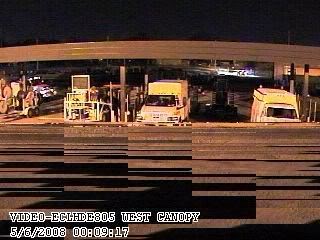
Has anyone ever had this issue?
Connected to geovision recorder (we did not install this system).
-
i have been researching and testing solutinos for this. Indigo vison has encoders that can put 10fps 4 cif video out at a bit rate of 32k. DPS telecom has a device that has a switch and a modem built in. Also it has alarm inputs. so it is possible ot get good video over a dial up. believe it or not.
-
security monster is a nut dont listen to him!
Just kidding. Ya just focus it after dark. If you can get it clear. Then you had a back focus issue.
-
I need an auto dialer that will dial out over a standard telephone line. Or it could be a modem & router that will dial out establish a connection and then allow me to transmit a video stream over the phone line (hints the router/switch). Dont worry about the low bandwith issue over telephone line. Already have that issue solved. I just need something to establish a connection as the line is not a active line. Then once connection established switch to the router/switch.
Any ideas?
-
yes business is extremely fierce. And there are a lot of companies that provide very cheap or the marketing term "affordable" systems.
You have to keep in mind that people dont have a problem paying good money for stuff that they see the VALUE in. Keyword VALUE.
If they dont think its worth their money then they most definitely wont buy it.
So there are two options.
1) you can propose the cheap systems and hope you’re the bid is the lowest.
2) you can stand out from everyone else and provide the SOLUTIONS that are effective.
Back when I owned my company one of the first things I used to say the very first conversation I would have with people was that I was going to be most likely twice as expensive as everyone else.
There is a HUGE market for cheap system. However there is also a HUGE market for expensive and EFFECTIVE systems that do the job.
People have a need. They request bids from companies. If no company shows that their product is a real solution that meets the customers needs then the customer will choose the lowest bid. Why not? All the company's at that point are selling the same thing. So the cheapest system would be the thing to do.
However if you have a need and buy a product that does not meet the need, what is it worth?
You see people pay for things that meet their needs.
To sum it.
You provide an effective solution and show the client that what you provide fulfills the customer’s needs. You will have no problem selling systems!
-
1400 dollar system is cheap regardless of any system you put it.
The cost to be in business alone shoudl make your cost of installing systems way more than that.
The absolute cheapest 4 camera system i ever sold was no less than $6,500.00.
And looking back on it I should have either charged more for that one or said forget it in general.
-
one way you have to look at is this.
If the person who is selling this system also includes at the time of sale a more expensive option, and the end user opts for the cheapy.
Well then it's the customers fault. He chose to save money over ensuring a quality product.
Most everyone knows on here that I am not one to advocate the installation of cheap systems.
However at some point you have to realize that no matter what. It will never be the quality that they see on "CSI". And so no matter they wont be as pleased as they think they will be when buying the system. So if they are offered a recommendation of a premium system and opt for the cheap system. Well then its there own damn fault.
Its a great time to slip in the suddle "I TOLD YOU SO"
(JUST KIDDING. THAT NEVER GOES WELL)
-
There are many manufacturers that are wireless trasmitters and receivers so yes you can get external transmitters.
Cheap???.....dont!
No you are not limited to 2.4 and 5.8
Some other commonly used frequencys are 5.3, 4..9, and 900mhz.
Anothing higher than 5.8 and you are in the licensed band. Which is do able. I deal alot with that now. However your going to be looking at components in the excess of 15-20K a piece.
Before you get into swapping out transmitters and such what you need to do is complete a wireless site suvey. That way you know what frequencys are being used. You can avoid alot of headache by doing this.
But if you can keep it wired! its not as simple as the wireless company manufacturers marketing department makes it seem!
-
I will be the one to say it.
Have you ever heard the phrase "junk in junk out"???
Here is the key. Dont install junk and you wont receive junk.
Simple.
-
IP vs. Analog
in General Digital Discussion
Posted
Jesus christ! Some of what you said is true but most is your opinion. Latency is not that bad. Hell I on a daily basis work with a client that is one of the largest electrical companies in the US and I have to Remote Desktop in to a computer at their headquarters to get access to the video at the substations and it is not that bad. We are talking milliseconds.
Second you can get better overall quality if you have the capacity on your network with IP megapixel cameras. End of story.
I have yet to see any HD analog cameras. Not saying there is not any just have not seen any.
And if all cameras are analog andrt all the analog ca just being converted to digital why would someone not just convert all the cameras at the head end to "convert" to megapixel.
Its because the mechanism used to capture the image is yes analog however the processing of the image at that point is digital and not just converted.
Isaac
Systems Engineer II